Mind Over Mat: How Pilates Rewired My Brain for Calm
Stress, anxiety, and mental clutter are more than emotional burdens—they’re physiological patterns. I used to feel constantly on edge, until I discovered Pilates wasn’t just about core strength. Backed by neuroscience, its slow, mindful movements began reshaping my nervous system. This is how a fitness practice became my quiet revolution for psychological balance. What started as a search for better posture evolved into a profound transformation of how I process stress, manage emotions, and experience daily life. Pilates did not simply strengthen my body; it retrained my brain to respond differently to pressure, offering clarity where there was once chaos. This journey is not unique to me—it reflects a growing understanding of how movement, when done with awareness, becomes a powerful tool for mental well-being.
The Hidden Link Between Movement and Mental State
What if your body’s alignment affects your mind’s clarity? It may sound surprising, but science increasingly supports the idea that physical discipline directly influences psychological resilience. Pilates, often viewed as a method for sculpting the core or improving flexibility, operates on a deeper level by reinforcing the mind-body connection through intentional breathing and precise, controlled motion. Unlike many forms of exercise that emphasize intensity or endurance, Pilates focuses on quality over quantity, demanding full attention to each movement. This engagement activates neural pathways associated with self-regulation and focus, making it more than physical training—it becomes a form of moving meditation.
Research in psychoneuroimmunology has demonstrated that rhythmic, coordinated movement can influence the autonomic nervous system, which governs our stress response. When practiced consistently, Pilates helps shift the body from sympathetic dominance—commonly known as the “fight-or-flight” state—toward parasympathetic activation, the “rest-and-digest” mode. A 2018 study published in the Journal of Bodywork and Movement Therapies found that participants who engaged in regular Pilates sessions reported significant reductions in perceived stress and improvements in mood. These changes were accompanied by measurable decreases in cortisol, the primary stress hormone. This suggests that the benefits of Pilates extend beyond muscle tone and posture—they reach into the very chemistry of how we experience stress.
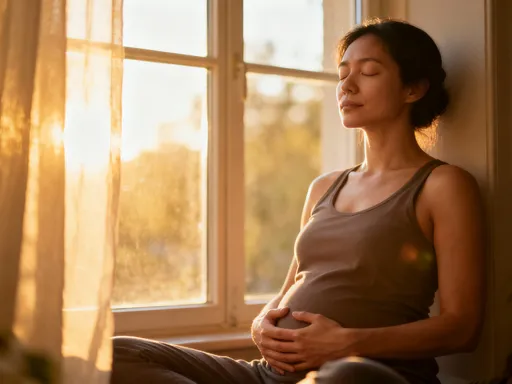
The mind does not operate in isolation. Every thought, emotion, and memory is reflected in the body’s posture, breathing pattern, and muscular tension. Chronic anxiety often manifests as shallow breathing, hunched shoulders, and a tightened jaw—physical habits that reinforce mental strain. Pilates interrupts this cycle by teaching awareness of alignment and breath, creating a feedback loop that calms both body and mind. Over time, this practice fosters a sense of internal order, helping individuals feel more grounded and present. The movements may appear gentle, but their impact on mental clarity is substantial, offering a quiet yet powerful antidote to the noise of modern life.
Why Modern Minds Need Controlled Movement
The human brain was not designed for the relentless pace of modern living. Today’s world bombards us with stimuli—constant emails, social media alerts, endless decision-making, and fragmented attention. This cognitive overload keeps the brain in a state of low-grade alertness, preventing true mental recovery. Without deliberate pauses, this chronic activation can lead to burnout, anxiety, and emotional fatigue. While vigorous exercise can help release tension, it often increases adrenaline and cortisol in the short term, which may not serve an already overstimulated nervous system. Pilates offers a different path: structured calm through controlled movement.
By requiring focused attention on posture, breath, and coordination, Pilates creates a cognitive “pause.” This deliberate slowing down allows the brain to reset. Functional MRI studies have shown that activities requiring mindful attention—such as those in Pilates—activate the prefrontal cortex, the area responsible for executive function, decision-making, and emotional regulation. At the same time, they reduce activity in the amygdala, the brain’s fear center, which is hyperactive in states of anxiety and stress. This neurological shift explains why many people report feeling mentally clearer and emotionally balanced after a Pilates session, even without breaking a sweat.
The practice demands presence. You cannot multitask while performing a proper roll-up or maintaining a balanced teaser. Each exercise pulls attention inward, away from external distractions and into the precision of movement. This inward focus mimics the effects of mindfulness meditation, training the brain to stay in the moment rather than ruminating on the past or worrying about the future. For women in their 30s to 50s—often juggling work, family, and personal responsibilities—this mental respite is invaluable. Pilates does not add to the day’s demands; it offers a space to step back, breathe, and reconnect with oneself in a way that feels both nourishing and empowering.
The Science of Breath and Nervous System Regulation
One of the foundational principles of Pilates is lateral thoracic breathing—a technique that emphasizes expanding the ribcage sideways and back while keeping the abdominal muscles engaged. This is not just a mechanical detail; it is a direct intervention in nervous system regulation. Most people under stress resort to shallow, upper-chest breathing, which signals the brain that danger is present, perpetuating a cycle of tension and anxiety. In contrast, deep, diaphragmatic breathing stimulates the vagus nerve, the longest cranial nerve and a key component of the parasympathetic nervous system. Activation of the vagus nerve slows heart rate, lowers blood pressure, and promotes a sense of calm.
Clinical research has established a strong link between breath patterns and emotional regulation. A study in Frontiers in Psychology (2020) found that individuals who practiced slow, controlled breathing for just 10 minutes a day experienced reduced symptoms of anxiety and improved emotional resilience. Pilates incorporates this principle naturally, requiring breath to be coordinated with movement in a rhythmic, intentional way. For example, exhaling during exertion helps engage the deep core muscles while simultaneously calming the nervous system. This dual benefit makes breath in Pilates not just a physical tool, but a psychological anchor.
Over time, consistent practice of Pilates breathing leads to lasting changes. Many practitioners report a lower resting heart rate, fewer episodes of breathlessness during stressful moments, and a greater ability to pause before reacting emotionally. These shifts are not imagined—they are measurable. Respiratory sinus arrhythmia (RSA), a phenomenon where heart rate increases slightly during inhalation and decreases during exhalation, is a marker of vagal tone and emotional flexibility. Higher RSA is associated with better stress management and psychological well-being. Pilates, by reinforcing long, controlled exhalations, enhances this natural rhythm, training the body to return to calm more quickly after stress.
Precision Over Power: How Focus Builds Mental Discipline
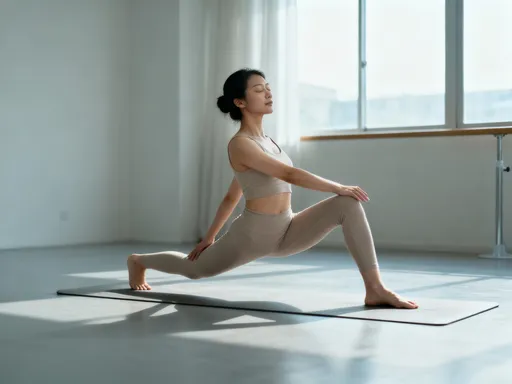
In a culture that often equates fitness with speed, intensity, and visible effort, Pilates stands apart. It does not reward force or speed; it rewards awareness, precision, and control. Each movement—whether a simple spine stretch or a complex leg series—requires full attention to alignment, timing, and breath. This emphasis on quality over quantity trains the brain to stay present, much like mindfulness meditation. The cognitive demand of coordinating small, controlled movements strengthens neural circuits involved in attention and self-regulation.
Neuroimaging studies have shown that sustained attention during low-load motor tasks—such as those in Pilates—can increase gray matter density in brain regions associated with executive function, including the dorsolateral prefrontal cortex. These areas are crucial for planning, impulse control, and emotional regulation. When I first began Pilates, I noticed that I would rush through movements, eager to “finish” the exercise. Over time, I learned to slow down, to feel each phase of the motion, and to correct misalignments without judgment. This shift in approach mirrored changes in my daily life: I became less reactive, more thoughtful in my responses, and better able to manage frustration.
The mental discipline cultivated in Pilates extends beyond the mat. Because the practice requires constant self-monitoring, it enhances metacognition—the ability to observe one’s own thoughts and behaviors. This skill is invaluable in managing stress, as it allows individuals to recognize unhelpful patterns before they escalate. For instance, noticing tension in the shoulders during a session might prompt reflection on sources of stress at home or work. By linking physical sensation to emotional state, Pilates fosters a deeper level of self-awareness that supports long-term mental health. It teaches that strength is not about pushing harder, but about moving with intention and control.
The Role of Routine in Psychological Anchoring
Consistency is a cornerstone of both physical and mental well-being. The brain thrives on predictability. When we engage in the same structured movements regularly, we create neural pathways that become familiar and automatic. This sense of routine provides psychological safety, especially during times of uncertainty or change. My weekly Pilates sessions became a non-negotiable part of my schedule—not because I always felt like going, but because I knew how much I relied on them for stability. On days when everything else felt chaotic, the mat was a place of order and calm.
Research on procedural memory—the type of memory used for motor skills and habits—shows that repetitive, structured movement fosters a sense of control and reduces anxiety. Unlike cognitive tasks that require constant decision-making, routine-based physical practices allow the mind to rest. The predictability of a Pilates sequence—hundred, roll-up, spine stretch, swan—creates a rhythm that is both grounding and soothing. This is particularly beneficial for women navigating major life transitions, such as parenting, career shifts, or aging, where external stability may be limited.
Moreover, the act of showing up for oneself regularly builds self-trust. Each session reinforces the message: “I am worth the time and care.” This simple yet powerful affirmation contributes to improved self-esteem and emotional resilience. Over time, the routine itself becomes a form of self-care that does not require grand gestures or large time commitments. Even 20 minutes of home practice can serve as a psychological anchor, helping to regulate mood and restore focus. In this way, Pilates is not just an exercise program; it is a practice of commitment—to the body, to the mind, and to one’s own well-being.
From Body Awareness to Emotional Insight
One of the most profound shifts I experienced through Pilates was increased body awareness—what psychologists call interoception. This is the ability to sense internal bodily states, such as heart rate, muscle tension, and breathing patterns. Before Pilates, I often ignored physical signals until they became pain or exhaustion. But as I tuned into my posture and movement, I began to notice how emotions manifested in my body. Stress showed up as tightness in my neck and shoulders. Sadness made my chest feel heavy and my spine collapse. Anger tensed my jaw and clenched my fists. These physical cues were early warnings, long before emotions overwhelmed me.
Improved interoception is strongly linked to emotional intelligence. A 2019 study in Biological Psychology found that individuals with higher interoceptive accuracy were better at identifying and regulating their emotions, and less prone to rumination and anxiety. Pilates enhances this skill by directing attention inward, encouraging practitioners to notice subtle shifts in alignment, tension, and breath. Over time, this heightened awareness allows for earlier detection of emotional imbalance, making it easier to intervene before stress escalates.
This mind-body feedback loop is now recognized as a key component of mental wellness. Therapists increasingly incorporate somatic practices—those that focus on bodily sensation—into treatment for anxiety and depression. Pilates, though not a therapy, shares many of these principles. It teaches that emotions are not just mental events; they are embodied experiences. By learning to read the body’s signals, we gain tools to manage our inner world more effectively. This insight has helped me respond to stress with greater compassion and clarity, rather than reacting impulsively or shutting down.
Building a Sustainable Practice: Beyond the Studio
Lasting change comes not from isolated efforts, but from integration into daily life. While attending Pilates classes provides structure and guidance, the real transformation occurred when I began applying its principles outside the studio. I started sitting with better spinal alignment at my desk, using breath to pause before responding in tense conversations, and moving with greater awareness during everyday tasks like lifting groceries or bending to tie shoes. These small, consistent habits compounded over time, reinforcing the mental and physical benefits of the practice.
Public health research supports the idea that movement practices emphasizing mindfulness and body awareness have higher long-term adherence than high-intensity regimens. A 2021 review in Preventive Medicine Reports found that individuals were more likely to maintain practices that felt sustainable, enjoyable, and integrated into their lifestyle. Pilates fits this model well—it requires no special equipment, can be adapted to any fitness level, and can be practiced in short sessions at home. This accessibility makes it a realistic option for busy women seeking lasting well-being.
To build a sustainable practice, start small. Incorporate a few minutes of Pilates breathing each morning. Focus on posture during daily activities. Follow a short online session two or three times a week. Over time, these moments of awareness accumulate, reshaping not just the body, but the mind. The goal is not perfection, but presence. By bringing intention to movement, breath, and alignment, we cultivate a quiet strength that supports us through life’s challenges. This is not about achieving a certain look or performance; it is about creating a foundation of calm, clarity, and resilience that lasts.
Strength That Comes From Stillness
Pilates taught me that true strength is not found in power, but in control—in breath, in movement, in mind. Its quiet science reshaped my psychological balance more than any quick fix ever could. By aligning body and breath, we do not merely train muscles; we train the mind to stay centered. In a world that glorifies busyness and constant output, Pilates offers a radical alternative: the power of stillness, precision, and presence. It is not an escape from life’s demands, but a way to meet them with greater clarity and calm. For women navigating the complexities of modern life, this practice is not just fitness. It is freedom—a daily promise to show up for oneself with care, intention, and quiet courage.